If you’ve ever admired those impressive “before-and-after” dental photos on a clinic’s website or social media page, you’ve already witnessed the power of dental photography in action. In today’s world, it’s no longer just a fancy add-on it’s an essential part of modern dental practice. From detailed case documentation to building patient trust, a single clear image can truly transform communication and credibility.
Dental photography enables practitioners to capture accurate images of teeth, gums, and smiles for diagnosis, treatment planning, and patient education. It also plays a key role in maintaining precise dental records, improving collaboration with labs, and showcasing professional skills online. Whether you’re a general dentist, orthodontist, or dental student, learning how to take high-quality dental photographs is one of the smartest investments you can make in your career.
Why Dental Photography Matters
- Better Patient Communication
Visual progress speaks louder than words. Showing patients clear images helps them understand their oral health and builds confidence in your treatment plan.
- Accurate Dental Documentation
Intraoral photographs make it easier to track changes over time, compare pre- and post-treatment results, and maintain detailed case histories.
- Improved Lab Collaboration
High-quality photos allow dental technicians to match shades, contours, and textures with greater accuracy, ensuring seamless aesthetic outcomes.
- Educational and Research Benefits
Sharp, well-composed clinical photographs enhance your presentations, case reports, and journal publications, helping your work stand out.
- Marketing and Social Media Presence
Authentic clinical photos can elevate your online presence, build your brand, and showcase your aesthetic and restorative work to potential patients.
Choosing the Right Equipment
You don’t need to invest in an expensive setup right away clarity and consistency matter more than the price tag.
DSLR and Mirror less Cameras:
1.Canon EOS 90D
2.Nikon D7500
3.Sony Alpha a6400
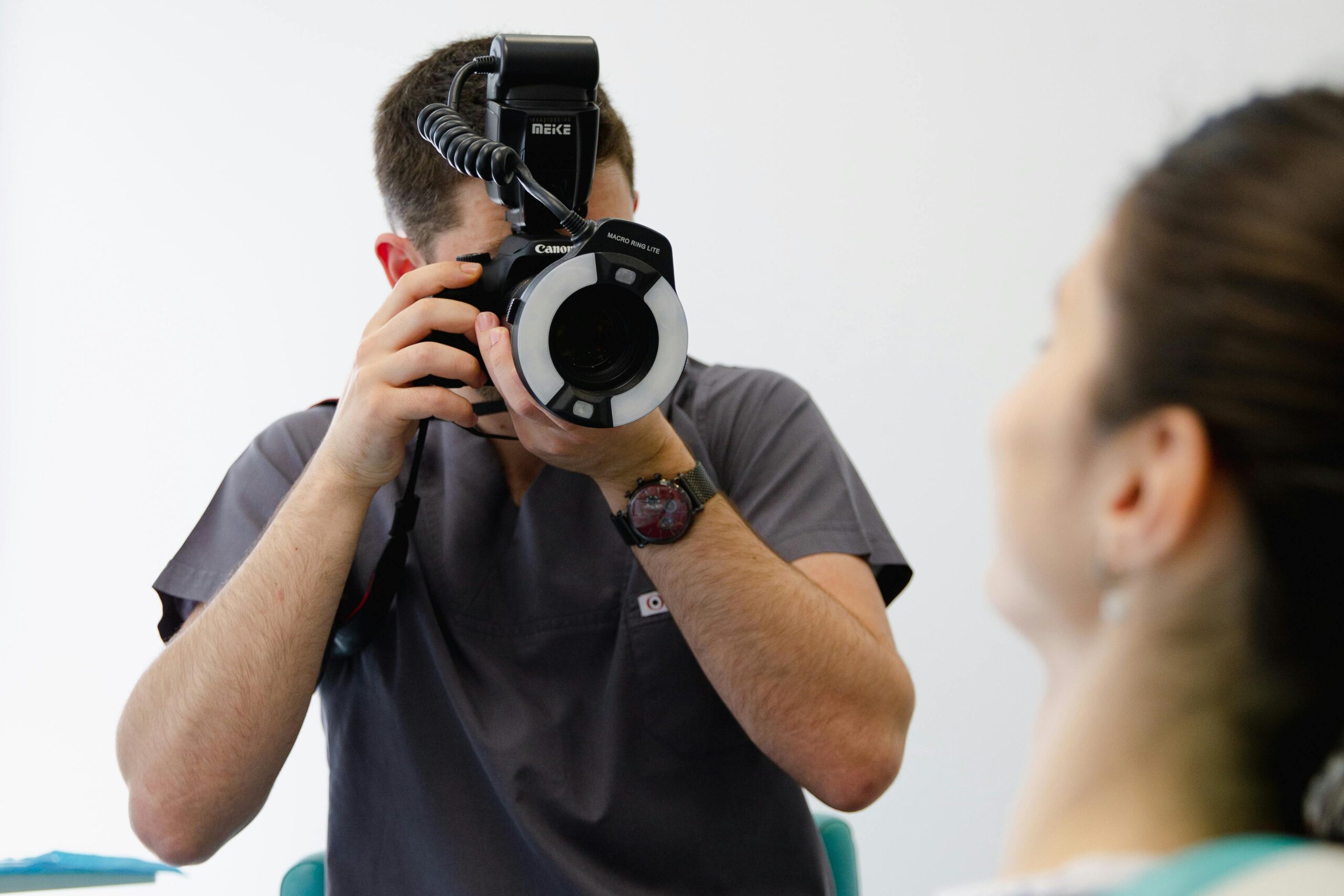
Pair these with a 100 mm macro lens and a ring flash for detailed intraoral photography. This setup is ideal for clinical documentation, educational projects, and research presentations.
Smartphone Options:
If convenience is your priority, modern smartphones like the iPhone 15 Pro, Samsung Galaxy S24 Ultra, or Google Pixel 8 Pro offer exceptional camera quality. When used with clip-on macro lenses and ring lights, they can produce surprisingly professional results perfect for quick case updates, tele dentistry, or social media content.
Essential Tools for Dental Photography
A complete dental photography kit should include:
- DSLR or smartphone with a macro lens
- Intraoral mirrors (occlusal and buccal)
- Cheek retractors and lip expanders
- Ring or twin flash
- Grey card for white balance
- Black and white contrastors
- Lens cloths and gloves for hygiene
Clean mirrors and proper lighting are essential for capturing accurate color tones and surface details. Having your tools organized also makes your workflow smoother and more efficient.
The Art and Science Behind Every Smile
Dental photography perfectly balances precision and creativity. It helps you identify subtle clinical changes that might otherwise go unnoticed, while allowing you to present cases in the most compelling and aesthetic way. With practice, you’ll learn how to capture natural smiles, ideal lighting, and angles that highlight both skill and artistry.
Ultimately, mastering dental photography enhances not only your clinical results but also your patient experience. So, pick up your camera or even your smartphone and start documenting your journey in dentistry, one smile at a time.